09 September 2010

Glass Fun Facts


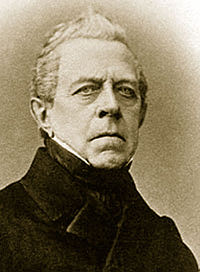
Franz Adolf Berwald
Franz Adolf Berwald (July 23, 1796, Stockholm – April 3, 1868) was a Swedish Romantic composer who was generally ignored during his lifetime. Due to this, he was forced to make his living as an orthopedic surgeon and later as a glass blower.

This must be one of the few times that one could make a better living as a glass blower, rather than as an orthopedic surgeon.
In the early 1850s, a German music critic asked Berwald if he was still a composer. His surly reply was, "No, I am a glass blower."

His Piano Concerto, finished in 1855, did not see the light of day until 1904, when Berwald's granddaughter Astrid performed it at a Stockholm student concert. Particularly in its last movement it may be compared to Robert Schumann or Edvard Grieg.

Berwald's music was not recognized favorably in Sweden during his lifetime, even drawing hostile newspaper reviews, but fared a little better in Germany and Austria. The Mozarteum Salzburg made him an honorary member in 1847.

When Berwald returned to Sweden in 1849, he managed a glass works at Sandö in Angermanland, owned by Ludvig Petré, an amateur violinist. During that time Berwald focused his attention on producing chamber music.

Berwald died in Stockholm in 1868 of pneumonia. The second movement of the Symphony No. 1 was played at his funeral.

Click on the YouTube link below to sample Berwald's music - his Symphony No. 3 in C Major, 'Sinfonie Singulière'.
Other Fun Fact Postings:

03 September 2010

Art Glass Today

As mentioned in an earlier post, Schiffer Books is Pennsylvania based publisher specializing in books about architecture and design, arts and crafts, and collectibles.

Their newest book "Art Glass Today" features a number of works by Washington Glass School artists - Erwin Timmers, Tim Tate & Michael Janis. The handsome book - edited by Jeffery Snyder - features over 60 contemporary, international glass artists and has over 350 color photos of artwork. Besides a strong showing from the Washington Glass School, a number of NCAGG artists are also included in the book.

Other notable glass artists in the book include Christopher Ries, Jamie Harris, David Reekie, and many more.

Congrats To Teddie Hathaway

Washington Glass School resident artist Teddie Hathaway's work was juried into an exhibiton of contemporary glass art from an array of local, regional, national and international artists, selected by a jurying committee that is part of "The Glass Art Festival" held every year in Sequim, Washington.
The juried exhibition was for artwork in any area of including, but not limited to, blown, cast, fused, kiln-formed, torchworked, pate de verre, stained, mosaic, and sand-carved glass.

Teddie Hathaway "WaterSong Triptych", mixed media; recycled glass and slate, 2010.

In her artist statement, Teddie talks about her love of "...the interplay of color and textures, contrasting matte finishes against glossy surfaces and opaque with clear and translucent. All of this is possible with glass, which is why I was attracted to the medium in the first place. I often use recycled glass as a major component in my work; although it can be a challenge to work with I find the transformation in this material exciting and the artwork becomes a reference to our shared environment...".

The Glass Art Festival features an array of events during the month of September. These include glass demonstrations, artist talks, workshops and glass-centric events throughout the picturesque town of Sequim, WA.

Transcendence - The Magic of Glass. MAC Exhibit Center, 175 West Cedar Street, Sequim, WA. September 1 through 25.

Congratulations Teddie on the show selection!

Click HERE to jump to pdf file of the Festival events.

01 September 2010

Art and Architecture: Public Art Project


Safeway Bethesda
Rounds VanDuzer Architects
Safeway has started construction of a new supermarket in Bethesda, MD. The new store will be a LEED certified supermarket as Safeway is committed to the greening of its stores. Besides going green, the supermarket will be built to what Safeway calls the urban “lifestyle” market, with high-quality urban design. Safeway is one of North America’s largest supermarket chains with more than 1,700 stores.

As part of the project, Safeway commissioned the Washington Glass Studio to integrate artwork into the architectural façade of the building. The wall of artwork will activate the street along the Bradley Street façade, and marks the first public artwork commission by the national supermarket chain for its stores.


The cast recycled glass and steel artwork is integrated into the architectural façade.


Over 30 feet long and 9 feet high, the glass and steel artwork will be a strong element located in Bethesda. The new building design will act as a "civic gateway" to Bethesda's Central Business District (CBD).


Responding to the architectural design by Rounds VanDuzer Architects the large scale artwork will feature colorful cast recycled glass made from glass salvaged from the original Safeway supermarket on the same site. Ecoartist Erwin Timmers had slogged thru the site demolition, removing glass for the artwork. Erwin's integration of reconfigured and recycled components has made him a leader in sustainable design and he continues his work in multidisciplinary LEED projects.


Cast recycled window glass sample of custom "fresh herb" design for Safeway.


Above is the "bay leaf" pattern.


UPDATE: Click HERE to jump to images of finished project.


31 August 2010

Artists Covenants


Surrealist artists at Peggy Guggenheim’s New York apartment, 1942.
Front Row: Stanley William Hayter, Leonara Carrington, Frederick Kiesler, Kurt Seligmann. Second Row: Max Ernst, Amedee Ozenfant, Andre Breton, Fernand Leger, Berenice Abbott. Third Row: Jimmy Ernst, Peggy Guggenheim, John Ferren, Marcel Duchamp, Piet Mondrian.

Prof Tim Tate was asked by an arts magazine to write an article about how artists work and how they can support each other - we will have a link when the article comes out.

Below an excerpt from Tim's article on how the Washington Glass School artists work.

While reading the original article dealing with virtual guilds, it reminded me of the “Artist’s Covenant” that we follow here in our extremely busy working studio. We have almost 20 artists working out of this space - most as resident artists. We also just admitted our 4000th student in 9 years. This is an extremely active artist collective.

The over-riding manifesto in this space is the “Artist’s Covenant”. This is an intrinsic agreement by all artists utilizing our space. No one is admitted without committing it. In our case the pledge is as follows: “A Rising Tide Raises All Boats”.

To become a member here at the Washington Glass School, you must first agree to be happy for everyone’s success, not just your own. This fosters a positive air in the work environment. Jointly, each artist agrees to not only look out for their own opportunities, but also to promote the other artists in the covenant.
If there is an article being written about you, can you mention another of the studio artists? If you have a museum show, can a piece or two be a collaborative work with another studio artist? If a show opportunity comes along, can you let others know in the collective if their work is appropriate? If a collector comes and buys one of your pieces, can you then show them around the studio and introduce them to work by other artists?

None of these things costs the original artist anything. They still would have the press, still have the museum show, still have the sale, etc. They simply have increased someone else’s opportunities.

The reason for doing this is simple, beyond the pay-it-forward kismet. As each of the artist become progressively more successful, the opportunities ascribed to the entire collective also increases in number and stature. Eventually, all begin to move up the art world ladder.
Historically, there have been many such covenants; such as the groups that surrounded artists Georgia O’Keefe and Joseph Cornell (though he seemed to incidentally benefit from the New York Surrealists movement).

To stay completely positive towards all others successes when we ourselves are not moving forward is tougher than it may seem. Without these unwritten contracts, artists can fall too easily into a solitary guarding of personal turf.

The benefits to this approach are immediately evident in the feel of the working studio…where all things are possible and the sky’s the limit. Being connected to a group like this provides a sense of community within a profession that is inherently individualistic. The long term benefit is the synergy created accelerates the success its members.

28 August 2010

Arts On Foot

Centered around 7th St & F St NWWashington, DC 20001

Marking its 18th anniversary, Arts on Foot is a multimedia Festival that kicks off the fall arts season in Downtown DC’s Penn Quarter. Incorporating visual art, music, theatre, dance, film, and creative cuisine, it’s an interactive celebration the whole family will enjoy. With a lively outdoor street festival as its centerpiece, Arts on Foot also sets you in the midst of the city - handy to also explore the neighborhood’s museums, theaters, galleries, cultural organizations, and shops. The Washington Glass School will have a booth in this art fair - come on down and visit some of the artists from the school!
Wednesday, September 8 - Friday, September 10, 11:00am to 7:00pm daily.
The festival is Saturday, September 11 from 11:00am to 6:00pm.
For more information, including the official program, visit http://www.artsonfoot.org/.

26 August 2010

WGS at Pilchuck

Our Elizabeth Ryland Mears and Robert Kincheloe are off setting up a residency at the famed west coast glass school Pilchuck.

The Professional Artists in Residency (PAIR) offered at Pilchuck Glass School is a time for professional artists to come together and share information, expand a current series, or design a new one, to network and use the facilities that Pilchuck has to offer for an intense week of discussions, critiquing, and networking. There are no instructors as such, so each artist is responsible for designing his/her own program for the week within the structure of the larger schedule...in essence every participant is both a student and an instructor, so ideally each will be engaged in both teaching and learning.

Washington Glass School's Elizabeth Mears has organized this years program for the residency and has given us a look at the schedule:

Janis Miltenberger will be with the flamework group and will lead a discussion and demo of her approach to flameworking. Rob Kincheloe will give a presentation on the boro glass casting process that he is developing - and he will have some samples for experimentation. Kathleen Elliott will give a presentation on the John Burton Program as an example of one of the possibilities of how we can continue to grow as artists.

We look forward to their updates!
Pilchuck's beautiful wooded campus - about 50 miles north of Seattle overlooking Puget Sound.

25 August 2010

Glass Art Society Seeks 2012 Proposals


Glass Pavilion at the Toledo Museum of Art
Photo courtesy of floto + warner


The Glass Art Society Board of Directors is requesting proposals for lectures, lec-mo's, demonstrations and panels for the 2012 Toledo, Ohio conference relating to the celebration of the 50th Anniversary of Studio Glass "Roots" in America.
You do not need to be a member of GAS to submit a presentation proposal.


Glass Art Society 42nd Annual Conference
Celebrating the 50th Anniversary of Studio Glass “Roots” in America
Toledo, Ohio June 13-16, 2012

DEADLINE FOR PROPOSAL SUBMISSIONS:
OCTOBER 25, 2010


Click HERE to jump to GAS' submission requirements.

22 August 2010

Digital Technologies & Contemporary Craft

An interesting article was put out by Craft Australia, Australia's craft advocacy organization: US based artist and design professor Donald Fortescue comments on recent work by craftspeople in the US which embraces digital technology. He defines the notions of sensuality, narrative and anachronism in this work and argues that digital technology is congruent with the core values of the crafts. He concludes that the challenge for artists and designers is to understand and become fluent not only with the technologies themselves but the meanings they carry with them.

"There has been an interesting trend in the last 10 years or so for many contemporary craft artists in the US to incorporate what has been called 'new' or more strictly 'digital' technology in their work. This might seem at odds with the very definition of craft practice with its emphasis on 'hand work', the primacy of the sensual and the honoring of traditions and historical precedents..."

"The crafts are often seen as outmoded and behind the times, clinging to technologies somehow inappropriate or rendered quaint by the proliferating 'new' technologies. However, clay and glass drinking vessels have been part of human culture for thousands of years. How long will the PET bottle be around for?
Similarly digital technologies while having the glamor of new and cool are arguably more distinctly artifacts of a moment in time. Technologically attuned craft artists are re-contextualizing old and new technologies and in doing so questioning the values we attribute to each."

Many of Donald's points are made using images from the
recent exhibition The New Materiality - Digital Dialogues at the Boundaries of Contemporary Craft at the Fuller Museum of Craft (Brockton, Massachusetts), including the work Virtual Novelist by Tim Tate.

Tim Tate, Virtual Novelist, 2008, Blown and Cast Glass, Electronic Components, Original Video,
Photographer: Anything Photographic

Click HERE to jump to Donald's full review.
